
Belt Conveyor
For Reliable Waste Transfer
Belt Conveyors are designed to transport screenings and dewatered sludge to their designated disposal points in wastewater treatment plants. In addition to wastewater treatment applications, they are also widely used in industries such as mining, logistics, and bulk material handling.
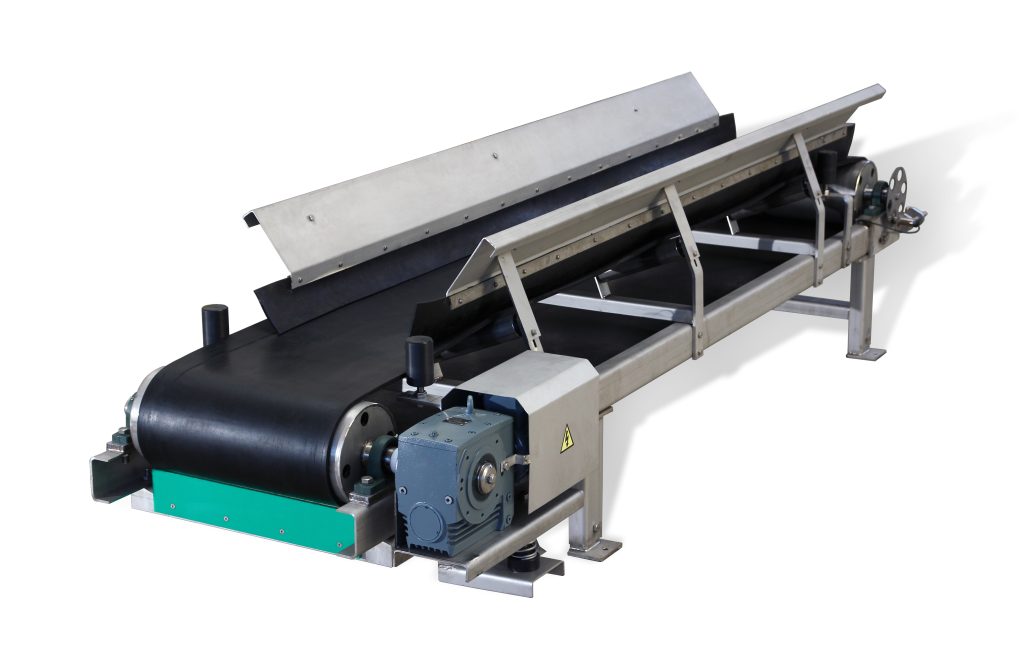
The conveyor belt, tensioned between two drums, travels over carrying rollers mounted on the conveyor frame, ensuring the efficient transfer of material to the required discharge point. At the discharge end, a scraper blade removes any material remaining on the belt, ensuring clean and efficient operation.
The conveyor frame supporting the drums is manufactured from either stainless steel or hot-dip galvanized steel. All rollers are made of stainless steel or galvanized carbon steel. The conveyor belt is manufactured from oil-resistant nitrile rubber reinforced with fabric cord, providing high durability and reliable performance under demanding operating conditions.
To ensure safe and reliable operation, the Belt Conveyor can be equipped with sensors integrated into the plant’s automation system. These sensors detect conditions such as drum slippage, belt misalignment, belt breakage, and conveyor overload, alerting the operator and enabling prompt corrective action.
Belt Width
Up to 1.000 mm
Belt Length
Up to 20.000 mm
Material
Galvanized / AISI304 / AISI316
Frequently Asked Questions
What is a Belt Conveyor used for in a wastewater treatment plant?
Belt Conveyors are used in wastewater treatment plants to transport screenings and dewatered sludge from one location to another. Typical applications include conveying screenings discharged from screening equipment into a collection container and transporting sludge cake from the sludge dewatering unit to a storage or disposal area. They provide a continuous, reliable, and efficient means of material handling.
How can odor and material spillage be prevented in Belt Conveyors?
With proper system design, material spillage and odor can be effectively controlled. Side skirts, enclosed covers, and the correct belt selection help minimize material loss, while the scraper system keeps the belt clean. For applications where odor control is critical, enclosed or fully covered belt conveyors are recommended.
How is operational safety ensured in Belt Conveyors?
Belt Conveyors can be equipped with a range of sensors and safety devices to ensure safe and reliable operation. Depending on project requirements, they can be supplied with a drum slip sensor, belt break sensor, overload protection switch, and an emergency pull-cord switch for immediately stopping the conveyor in emergency situations.