
Flocculator
Optimized Design for High Flocculation Efficiency
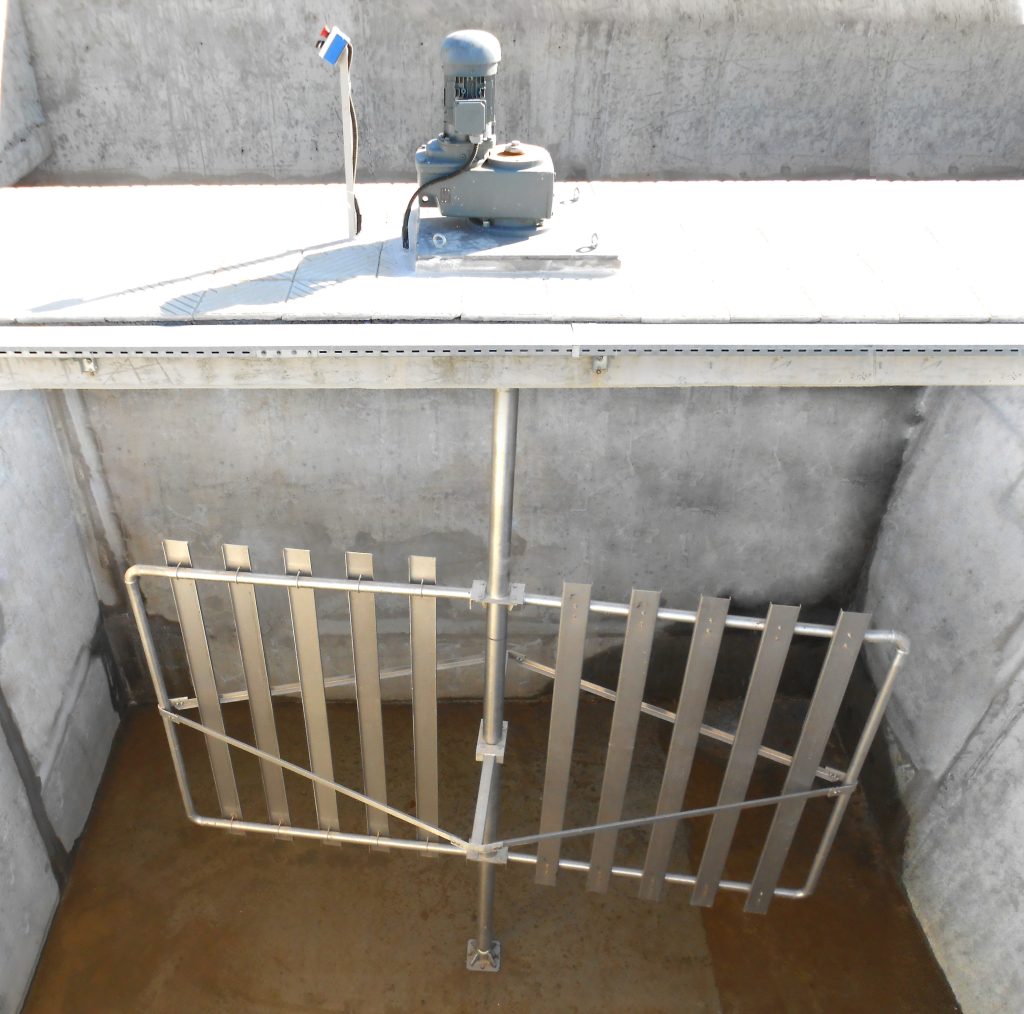
Flocculators are used in water and wastewater treatment processes to promote flocculation. The flocculation process is achieved by rotating the mixer blades at the designed speed through a gear motor drive assembly, ensuring effective mixing and the formation of stable flocs.
Flocculators are designed according to the required velocity gradient (G-value) and the dimensions of the process tank. Depending on the tank size, the units can be manufactured with a bottom support bearing. All components in contact with water are manufactured from stainless steel to ensure excellent corrosion resistance and long service life.
Thanks to the modular blade design with adjustable blade positions, the mixing characteristics can be optimized even during operation without changing the rotational speed, providing maximum process flexibility.
Tank Width
Up to 12.000 mm
Tank Depth
Up to 5.000 mm
Material
AISI304 / AISI316
Frequently Asked Questions
How does a Flocculator differ from a Rapid Mixer?
Flocculators operate at low rotational speeds to generate low shear forces, preventing the formed flocs from breaking apart. In contrast, Rapid Mixers operate at high speeds to ensure the rapid dispersion and homogeneous mixing of treatment chemicals. Therefore, the difference between the two lies not only in their operating speed but also in their design and intended process function.
Which parameters are considered in the design?
When designing a Flocculator, factors such as tank dimensions, the required velocity gradient (G-value), fluid characteristics, and process requirements are carefully considered. Based on these design parameters, the blade dimensions, rotational speed, and gear motor selection are determined to achieve optimum mixing performance.