
Linear Mechanical Screen
Reliable Screening Solution for Preliminary Treatment
Linear Mechanical Screens are used in the preliminary treatment stage of wastewater treatment plants to remove solids that could damage downstream equipment and interfere with plant operation.
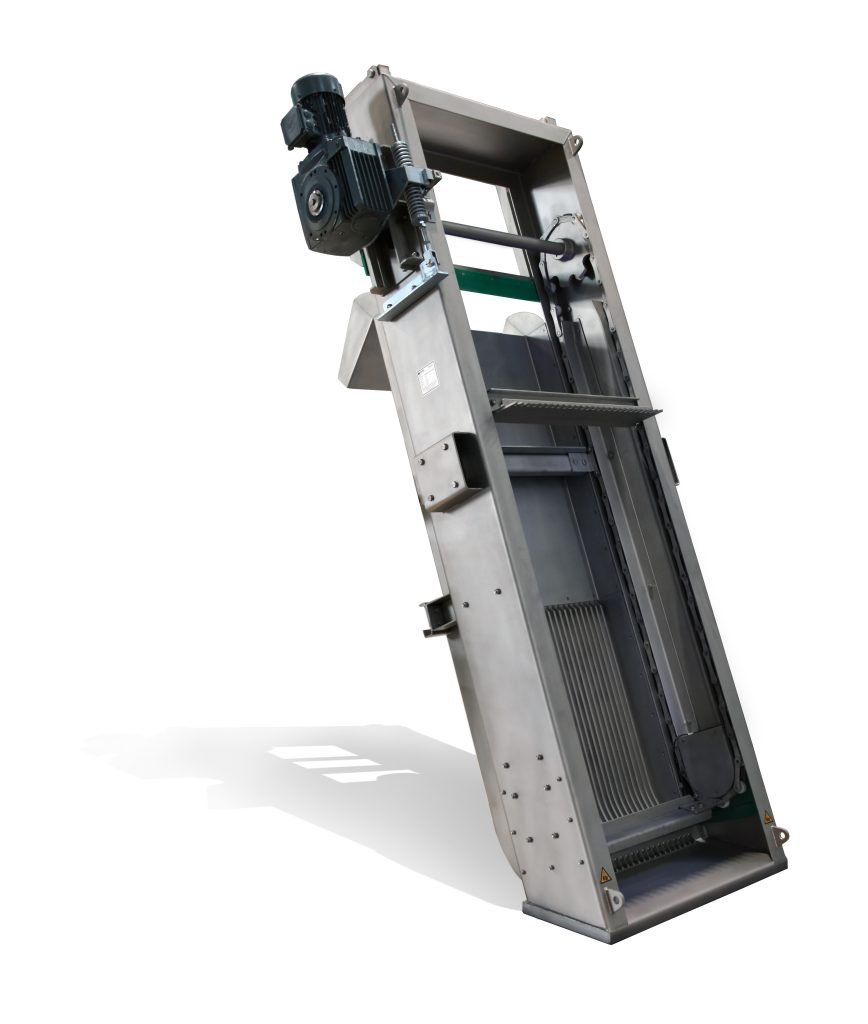
Installed at an inclination of approximately 70° within the channel, Linear Mechanical Screens are available in both coarse and fine screening configurations, depending on the required bar spacing. The rake assembly, driven by a gear motor, lifts the screenings retained on the screen bars to the discharge point. At the top of the screen, a scraper blade removes the collected screenings and discharges them into a container or onto a conveyor.
Each unit is custom-manufactured to suit the channel width and depth. The entire system, including the frame, chain and sprocket assembly, and screen bars, is manufactured entirely from stainless steel.
Unlike conventional designs with a submerged lower drive mechanism, Linear Mechanical Screens are designed without moving drive components below the water level, significantly reducing the risk of jamming and mechanical failure. In addition, an integrated torque protection system automatically prevents equipment damage in the event of a blockage.
Channel Width
Up to 2.500 mm
Channel Depth
Up to 12.000 mm
Screening Gap
6-50 mm
Material
AISI304 / AISI316
Frequently Asked Questions
How can the performance of Linear Mechanical Screens be improved?
To achieve optimum screening performance, Linear Mechanical Screens should be installed in stages at the inlet works of the wastewater treatment plant, with a coarse screen followed by a fine screen. During the plant design stage, the bar spacing should be progressively reduced to ensure efficient and reliable solids removal.
Is there a protection mechanism to prevent screen jamming?
Linear Mechanical Screens are designed to minimize the risk of jamming by eliminating moving drive components below the water level. In addition, the drive unit is equipped with a torque protection system that automatically stops the equipment in the event of an overload, preventing mechanical damage.
What are the maintenance requirements for Linear Mechanical Screens?
The chain and sprocket assembly, bearings, and scraper blade should be inspected periodically. Regular removal of accumulated screenings and routine inspection of all moving components are essential for ensuring reliable operation and maximizing the service life of the equipment.