
Thickener
Enhanced Efficiency for Sludge Dewatering Systems
Thickeners are used in wastewater treatment plants to increase the solids concentration of sludge withdrawn from sedimentation tanks. By thickening the sludge before dewatering, they improve the efficiency and performance of downstream sludge dewatering systems.
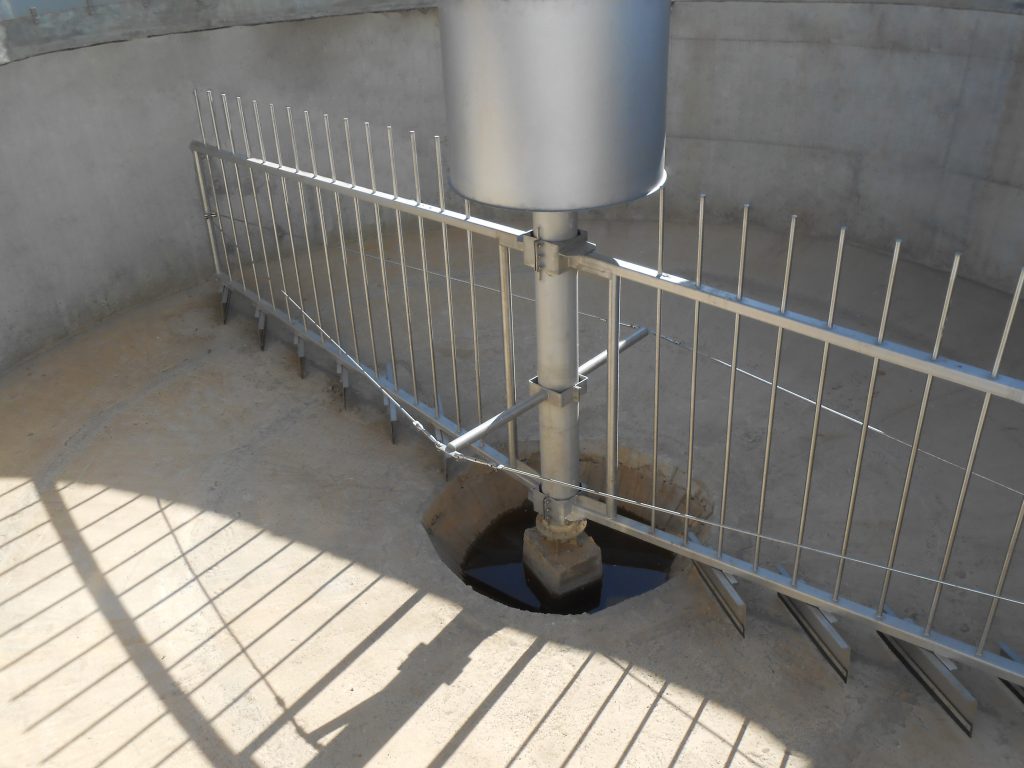
The central drive unit rotates a shaft fitted with rake arms and thickening pickets, providing gentle mixing to promote sludge thickening. Bottom scraper blades attached to the same rake arms collect the settled sludge and convey it toward the central sludge hopper for discharge.
Fixed Bridge Thickeners are equipped with a proven central drive gearbox and bearing assembly. Depending on the tank diameter and project requirements, center-pier support or rotating bridge configurations can also be supplied.
All components in contact with water are manufactured entirely from stainless steel. On steel bridge models, the bridge structure is fabricated from hot-dip galvanized steel. By increasing sludge concentration before dewatering, Thickeners provide greater operational flexibility and improve the overall efficiency of sludge handling processes.
Tank Diameter
Up to Ø29 m
Bridge Material
Galvanized / AISI304
Submerged Material
AISI304 / AISI316
Frequently Asked Questions
Why is sludge thickening necessary?
Raw sludge typically contains a low concentration of solids and can place a significant load on dewatering equipment when fed directly into the process. Sludge thickening reduces sludge volume, decreases the load on dewatering systems, and helps optimize polymer and energy consumption. As a result, overall operating costs are reduced while dewatering performance is improved.
What types of Thickeners are available?
Different sludge thickener configurations can be selected depending on the tank diameter and process requirements. The most common design is the fixed bridge type with a center drive unit. Center-pier supported and rotating bridge configurations are also available. The appropriate system is selected based on the tank dimensions and sludge characteristics.