
Perforated Plate Screen
Optimized Design for Maximum Solids Removal
Perforated Plate Screens are used to remove suspended solid particles from water in preliminary treatment applications.
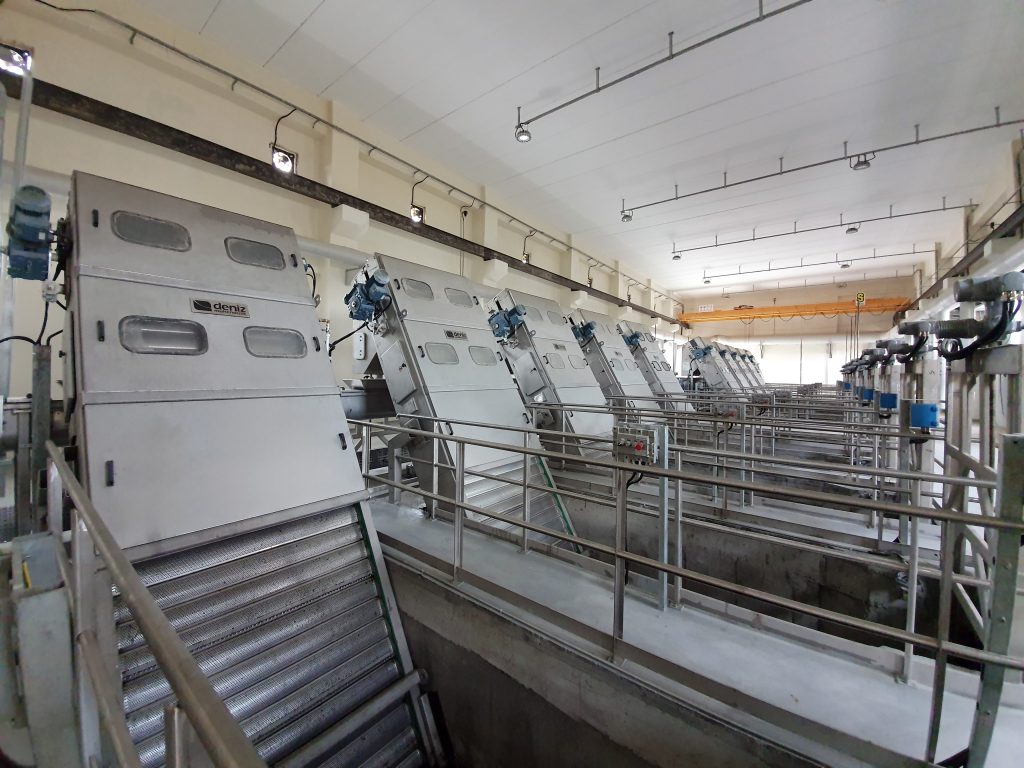
The screening surface consists of perforated plates that extend across the full width of the channel and travel continuously on a chain-driven system. Screenings retained on the plate surface are conveyed to the discharge section, where they are removed by a rotating brush assisted by a pressurized wash water system. This ensures efficient cleaning of the screening surface and reliable discharge of the collected solids.
Perforated Plate Screens are custom-designed according to the width and depth of the installation channel. The perforated plates are available with hole diameters starting from 3 mm and can be manufactured to meet specific screening requirements. The entire structure is manufactured from stainless steel, while the cleaning brushes are made from specially selected nylon.
Thanks to their excellent performance in capturing fibrous materials, Perforated Plate Screens provide reliable operation in treatment processes where efficient preliminary screening is essential.
Channel Width
Up to 2.500 mm
Channel Depth
Up to 10.000 mm
Screen Gap
3 – 6 mm
Material
AISI304 / AISI316
Frequently Asked Questions
What types of screenings are Perforated Plate Screens most effective at capturing?
Perforated Plate Screens are particularly effective at capturing rags, textile fibers, floating debris, and small solid particles. They are therefore preferred in treatment plants and process applications where fine preliminary screening is essential.
How are the perforation size and screening opening selected?
The perforated plates are available with hole diameters starting from 3 mm and are most commonly supplied with 6 mm perforations, although larger sizes can be provided to meet specific process requirements. The selection is based on factors such as plant flow rate, the minimum particle size to be retained, and the level of protection required for downstream equipment. Smaller perforation sizes provide finer screening performance but reduce the open area of the screen, so the hydraulic design must be optimized accordingly.
How is the screening surface cleaned? Is there a risk of clogging?
Screenings retained on the moving perforated plates are conveyed to the discharge section, where they are removed by a rotating brush system assisted by a pressurized wash water system. This automatic cleaning process keeps the perforated surface clear, ensuring reliable screening performance while minimizing the risk of clogging.